
BIRDWATCH
Cleanup on Aisle 9
The unparalleled scavenger
By Susan Campbell
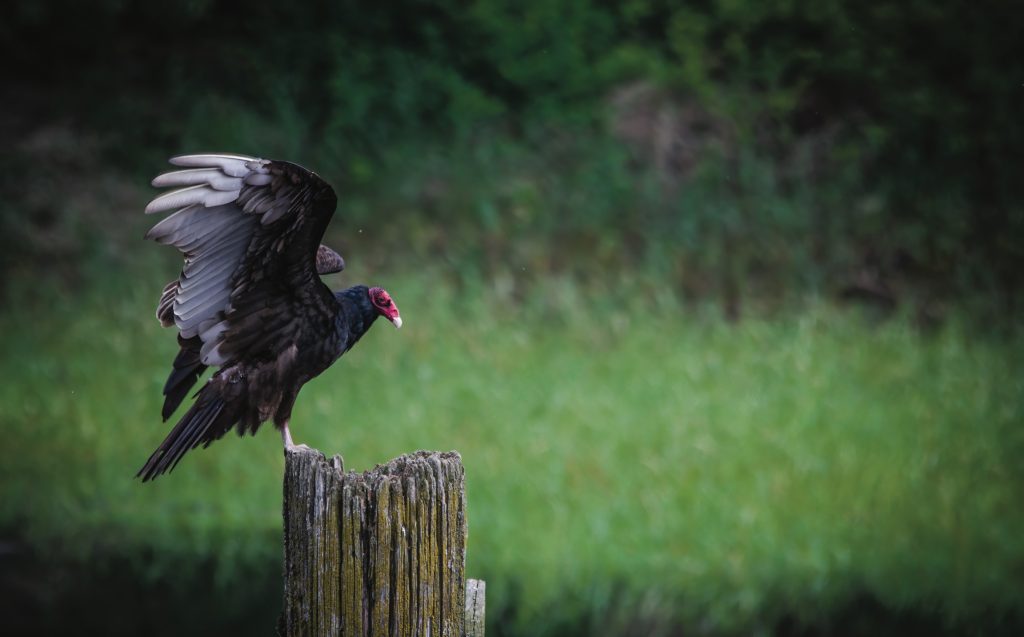
There! By the edge of the road: It’s a big, dark bird. It looks like it could be a wild turkey. But . . . is it? A closer view reveals a red head and face with a pale hooked bill, but a neck with feathers and a shorter tail. Definitely not the right look for a turkey — but perfect for a turkey vulture. This bird is also referred to as a buzzard or, for short, a “TV.”
Making an identification of these odd-looking individuals is somewhat harder these days since wild turkeys have made a good comeback in the Piedmont of North Carolina. Turkey vultures and turkeys can occasionally be seen sitting near one another in an agricultural field where they may both find food or are taking advantage of the warmth of the dark ground on a cool morning.
Turkey vultures, however, are far more likely to be seen soaring overhead or perhaps perched high in a dead tree or cell tower. They have a very large wingspan with apparent fingers, created by the feathers at the end of the wing. The tail serves as a rudder, allowing the bird to navigate effortlessly as it’s lifted and transported by thermals and currents high above the ground. These birds have an unmistakable appearance in the air, forming a deep V-shape as they circle, sometimes for hours on end.
It’s from this lofty vantage that turkey vultures travel in search of their next meal. Although their vision is poor, their sense of smell is keen. They can detect the aroma of a dead animal a mile or more away. They soar in circles, moving across the landscape with wings outstretched, sniffing all the while until a familiar odor catches their attention.
Turkey vultures are most likely to feed on dead mammals, but they will not hesitate to eat the remains of a variety of foods, including other birds, reptiles and fish. They prefer freshly dead foods but may have to wait to get through the thick hide of larger animals if there is no wound or soft tissue allowing access. Toothed scavengers such as coyotes may actually provide that opportunity. Once vultures can get to flesh, they are quick to devour their food. With no feathers on their head, there are none to become soiled as they reach into larger carcasses for the morsels deep inside.
Vulture populations are increasing across North Carolina — probably due to human activity. Roadways create feeding opportunities year-round. Landfills, believe it or not, also present easy meals. In winter, the northern population is migratory and shifts southward, so we see very large concentrations in the colder months. The large roosting aggregations can be problematic. A hundred or more large birds inhabiting a stand of mature pines or loitering on a water tower does not go unnoticed.
Except for birdwatchers and those who live near a roost site, most people overlook these impressive birds. Often taken for granted, they are unparalleled scavengers, devouring the roadkill our highways inevitably produce.