
BIRDWATCH
Long Trek North
Louisiana waterthrush leads the way
By Susan Campbell
In early spring, birdwatchers such as myself are eager to spot the first returning migrants of the season. These are northbound birds that have spent the cooler months far to our south, in Central or South America. There, the living is easy, with plentiful food and a mild climate. But as the days begin to lengthen, these birds begin their return flight to the breeding grounds. Many may fly both day and night as the urgency of their mission increases. Hormone levels drive them to make their way swiftly to their natal area. Some return to the exact patch of woods, marsh or lake where they themselves hatched.
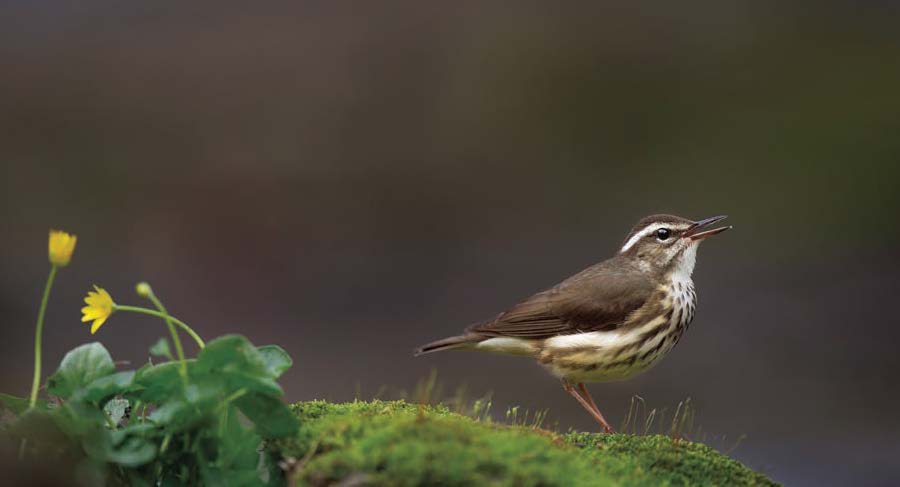
One of the earliest to return here in central North Carolina is the Louisiana waterthrush. A small, drab warbler, it is far more likely to be heard than seen at first. Its plumage is streaky brown and white. Birds can be recognized by their prominent broad white eyebrows and pink legs. As its name implies, the species prefers wet habitat, being at home along streams and rivers where it not only feeds in the trees, but along banks and around rocks at the water’s edge.
In the spring, Louisiana waterthrushes will call or sing as they move from place to place. As with so many species, the male’s vocalizing serves not only to attract a mate, but to establish territory. They have a loud, melodic song that carries well over the sound of moving water. The species’ call note, too, is a high volume “chip” that is easy to pick up in thick vegetation or above a gurgling stream.
Louisiana waterthrushes are insectivorous and so will consume any fly, midge or beetle that it sees. Also, waterthrushes will pick hatching aquatic insects such as mayflies or stoneflies out of the water. Individuals may wade in the shallows as they forage, making short jabs at potential prey items.
After pairs find one another and begin to raise the next generation of waterthrushes, they become virtually silent. This no doubt enables them to protect their nesting site and their young from would-be predators. Nests are built on or near the ground, making them relatively vulnerable to disturbance. Secretive behavior also reduces the chances that they will be parasitized by brown-headed cowbirds, which are known to seek out open cup nests such as those made by waterthrushes to deposit a single egg. The resulting nestling will be unwittingly cared for by waterthrush parents to the detriment of their own young.
Being one of the earliest warblers to return in the early spring, they are also likely to disperse in early summer after their young leave the nest. They may return to their Central American wintering grounds by the end of July. If you are fortunate enough to encounter a Louisiana waterthrush in the weeks to come, enjoy it because it is not likely to be around for very long.