
Jack's Lanterns

Jack's Lanterns
The joy and wonder of carved pumpkins
Story and Photographs by Todd Pusser
In the fall of 2011, our family displayed one last, grand pumpkin show. It was an event that my parents still talk about to this day. That year, the autumn weather was glorious, filled with bright, warm sunny days and cool, crisp evenings. A full week was spent prepping the front yard for the throngs of people that would venture out to our rural Eagle Springs home just to see a display of carved pumpkins. These were not just any run-of-the-mill jack-o’-lanterns with triangular eyes and teeth, mind you, but pumpkins that glowed with the faces of popular cartoon characters, collegiate mascots, famous movie stars and wild animals. Bales of hay were stacked high across the front yard. Scarecrows were staked into the ground. And tiki torches lined the drive.
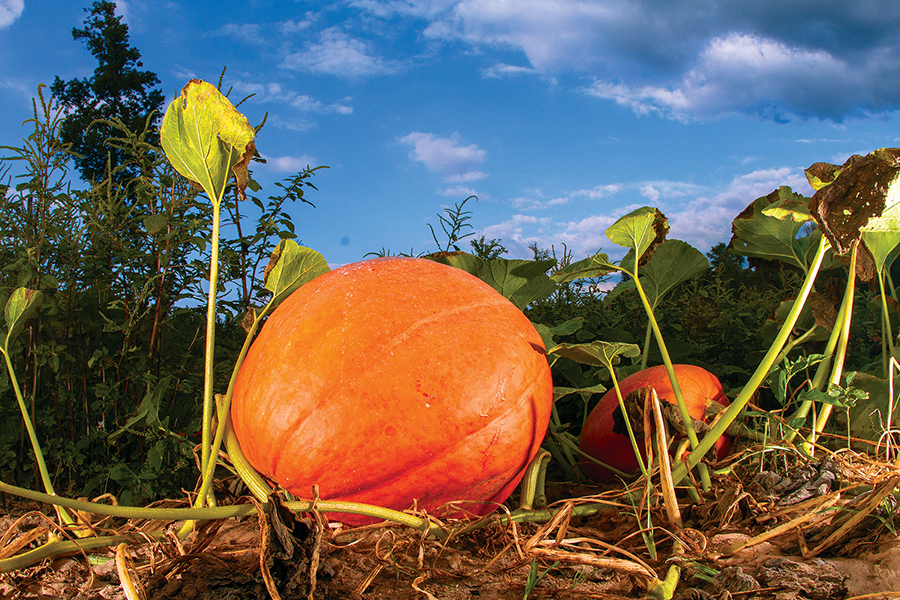
A local farmer, Charles Martin, had kindly volunteered to grow us a crop of pumpkins on a portion of his property. We picked the pumpkins, an extra-large heirloom variety known as Mammoth Gold, from his dusty field the first week of October, and by the time Halloween weekend rolled around, I had carved over 200 of the giant gourds. Mammoth Gold pumpkins average around 40 pounds in weight and are bright orange. Their skin is relatively soft and pliable, making them much easier to carve compared to store-bought pumpkin varieties, like Sugar Pies or Connecticut Field pumpkins, which have thick skins, dense fibrous insides and long stems.
Over 8,000 people visited the yard during the three nights that we displayed the pumpkins. People had traveled all the way from Greensboro and Fairmont just to see jack-o’-lanterns glowing beneath a star-filled sky. We asked that visitors donate cans of food for local charities, which they did by the truckload. It was the highlight of our year.
Jack-o’-lanterns displayed on the front doorstep on Halloween night are as iconic as Christmas trees and baskets of Easter eggs. They are holiday symbols that have become fully ingrained in our American culture over the last 150 years. In her book Pumpkin: The Curious History of an American Icon, author Cindy Ott notes that the first published image of a carved jack-o’-lantern appeared in an 1867 issue of Harper’s Weekly magazine. However, the origin story of jack-o’-lanterns takes place on the far side of the Atlantic, in the woodlands and moors of the Old World.
Centuries ago, ancient Celts of Ireland and Scotland celebrated the end of the harvest season in a festival known as Samhain. The festival commenced at sunset on Oct. 31 (Samhain’s Eve) and continued until sunset on the following day. During that first night of celebration, the Celts believed that the spirits of the dead would walk about the land, freely among the living. In order to ward off those restless souls, people would dress in frightening costumes and carve scary faces into root vegetables like turnips and potatoes.
Originally cultivated in North America over 7,000 years ago, pumpkins, a type of winter squash, were at the time completely unknown to Europeans. They would not encounter pumpkins until much later, when the first Colonists arrived on our shores and discovered Native Americans growing the fruit (yes, pumpkins are scientifically a fruit and not a vegetable) as a crop. Among those early European settlers were Irish immigrants who brought with them the legend of Stingy Jack.
Though countless versions of this tale have circulated through the centuries, all agree that Jack was an unlikeable character who had a penchant for tricking people. In one recurring tale, Jack even tricked the devil. Not one to trifle with, the devil banned Jack from hell when he died. Due to a lifetime of mischievousness and immorality, Jack had already been denied access to heaven. He was soon cursed to wander between both worlds for eternity, with only an empty turnip lantern to guide his way. Eventually, the devil felt pity for Jack and granted him a single ember of coal to light his lantern on his journey through purgatory. And the jack-o’-lantern was born.
My fascination with carved pumpkins dates back to my earliest childhood days in Eagle Springs. Like most kids, I loved Halloween. I planned my costumes months in advance. Devouring Mary Janes and Bit O’Honey candies, as well as Reese’s Peanut Butter Cups, acquired from a night of tricks or treats was one of life’s great pleasures. To no surprise of anyone who knows me, It’s the Great Pumpkin Charlie Brown was, and still is, my favorite TV show. So, when my parents took me to see a display of jack-o’-lanterns at a local farm one crisp October night, I quickly became obsessed with the glowing gourds. The farmer, Otis Boroughs (who taught in Moore County schools for 30 years and would later become my driver’s ed teacher), grew a large field of pumpkins each summer near my grandmother’s house.
Turns out Mr. Boroughs also had an artistic side. He would carve extraordinary scenes into the pumpkins he harvested and display them each and every Halloween night for all to see. People traveled from all parts of the state to see his magnificent jack-o’-lanterns. Dozens and dozens of glowing pumpkins lined his yard and the loft of his old red barn. Everything from Mickey Mouse to Bugs Bunny and E.T. to the N.C. State wolf mascot were on display. One of his most popular was of a horse-drawn carriage, carved over multiple pumpkins, with Cinderella sitting inside.
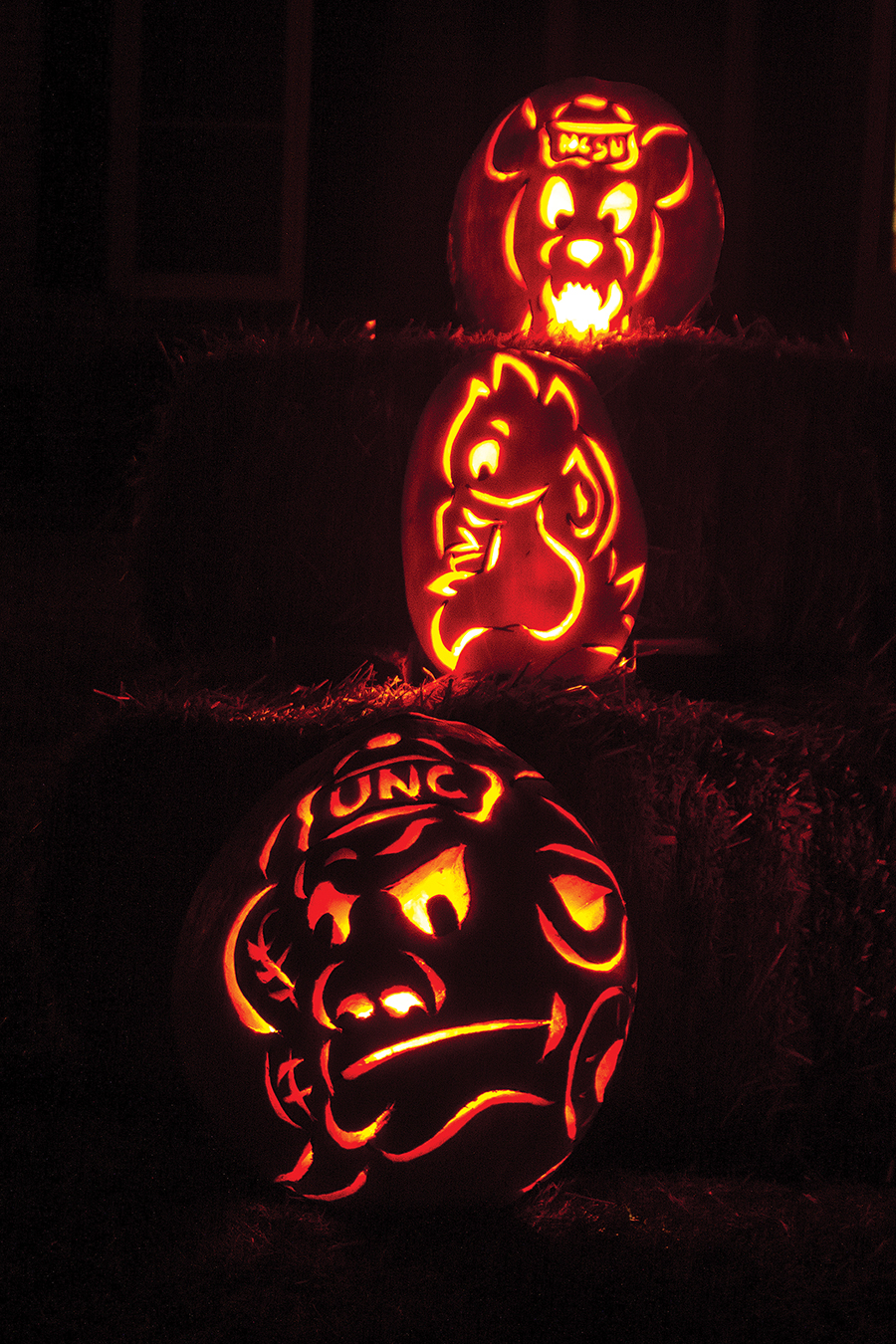
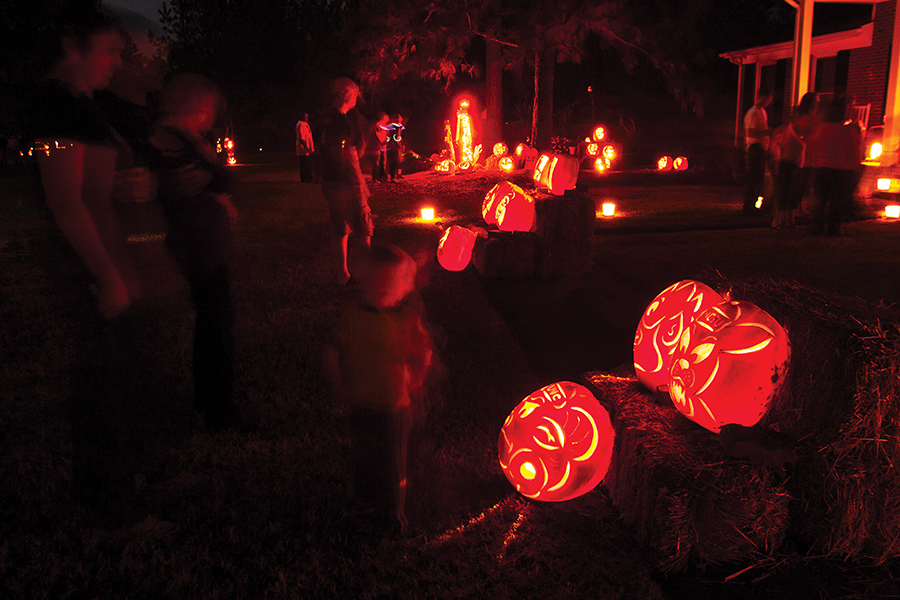


For a kid who loved to doodle and had notebooks full of drawings of dinosaurs and snakes, I could not figure out how he had carved such intricate characters into the sides of the giant gourds. I would spend hours walking among his glowing creations as the aroma of baked pumpkin pie (from the candles burning inside) hung heavy in the cool, evening air. It was magical.
For years, I pestered Mr. Boroughs to teach me how to artfully carve a pumpkin. Finally, one Saturday afternoon, after the fall harvest, he relented. I was around 10 years old at the time. That day in his workshop, surrounded by tools and tractors, he taught me the trick to great pumpkin carving.
First, you must choose a pumpkin that fits the design that you have in mind. That day, I had brought with me some permanent markers to draw the Demon Deacon, the mascot of Wake Forest University — my dad’s favorite team — on the side of a pumpkin. Mr. Boroughs picked out a rather tall, oblong-shaped pumpkin that was able to stand upright on its own. It matched well with the long face of the Deacon. After a few minutes, I had completed my drawing.
Next came the most important part, choosing the proper knife to carve out the design. Mr. Boroughs’ tool of choice was a 12-inch compass hand saw with a small metal handle. The narrow, finely serrated blade enabled him, and me, to work magic on a pumpkin. With that simple blade, I easily cut out the sharp corners and intricate patterns, like the eyes and bowtie, of the Demon Deacon. It was much easier to use than the large straight-edged blades I was accustomed to using when cutting out the stereotypical triangular eyes, nose and mouth of past jack-o’-lanterns.
The crowning glory was when Mr. Boroughs placed a candle inside the pumpkin and turned off the lights in the workshop. The face of the Demon Deacon exploded to life, casting a golden glow throughout the tool hed. It was jaw-dropping. No doubt, this is what those early Irish immigrants felt when they put candles in those first pumpkins instead of turnips.
With that afternoon’s pumpkin carving class fully embedded into my memory bank, I went on my way. That Halloween, I carved out a half-dozen jack-o’-lanterns, following the outlines of my hand-drawn designs, including a ghost and caricatures of Mickey Mouse and Godzilla. The only people to see them were my parents and grandmother. My father loved the Demon Deacon. Still, Mr. Boroughs insisted that I tell no one the secret sauce for carving extraordinary pumpkins.
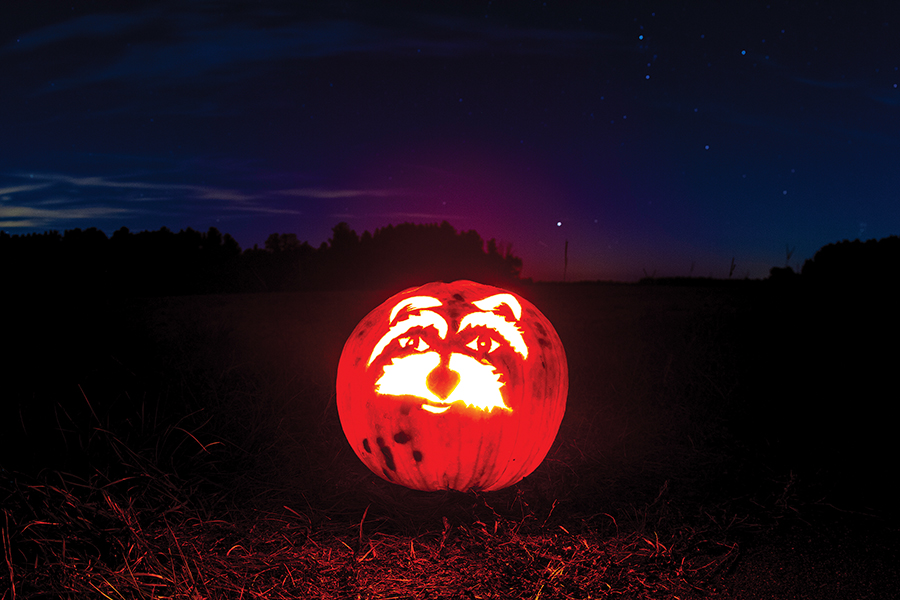
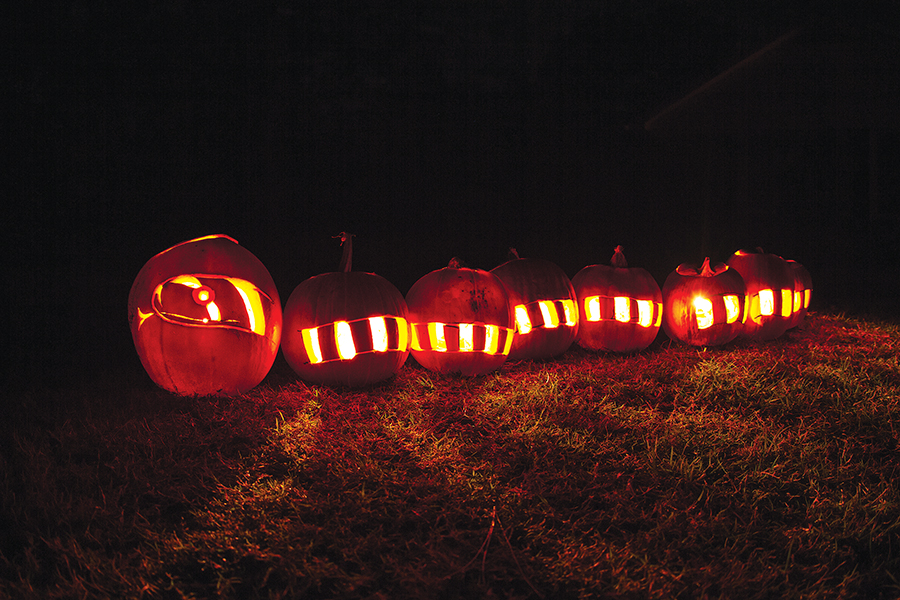
Throughout my teen years, Mr. Boroughs continued his annual display of jack-o’-lanterns, drawing ever larger crowds. His pumpkins were featured in newspapers and on local television stations. Despite being distracted by the usual teenage boy preoccupations of sports and girls, I made it a tradition to visit his farm each and every Halloween.
But alas, all good things come to an end. Father Time finally caught up with Mr. Boroughs. The toll of tending a pumpkin field and carving over a hundred jack-o’-lanterns each year became too much, and he eventually closed his grand pumpkin show for good in the late 1990s. To say I was disappointed is an understatement. His pumpkin display had meant so much to the communities of Eagle Springs and Jackson Springs. The thought of local kids not experiencing the same kind of wonderment that I had experienced as a child viewing his marvelous jack-o’-lanterns was simply too much to bear.
After a couple years of dark Halloween nights, I decided to follow in the footsteps of Mr. Boroughs and create a pumpkin show of my very own, this time in the yard of my childhood home, just a few miles from his farm. The yard was just shy of 2 acres and could easily accommodate many pumpkins, as well as long lines of people. And that is exactly what I did for nearly a decade, culminating in that last pumpkin display in 2011. By that time, life and work had begun to take me far away from Eagle Springs. It became impossible to commit to the time necessary to produce such a large show, so I hung up my carving knives.
Since then, things have changed dramatically. The secret sauce for great pumpkin carving is now readily available to everyone, with mass-produced pumpkin carving kits showing up on store shelves well before Labor Day. Countless online stencils, of every subject imaginable, can be downloaded and applied to pumpkins for easy carving. One can even buy artificial carving pumpkins so you can preserve your jack-o’-lantern for years to come.
Mr. Boroughs passed away in 2024, at the ripe old age of 87. Eagle Springs farmer Charles Martin followed soon after, in February of this year.
I am now a proud parent to a precocious 7-year-old girl named Ella. She has an artistic side herself. Every year, we try and make a point to carve at least one jack-o’-lantern for Halloween. Perhaps this year she will want to carve out a character from the hit K-Pop Demon Hunters since she is constantly singing the movie’s songs on the way to school. Or, after seeing Toy Story 5 this past summer, she may want to try a Buzz Lightyear.
Or maybe, just maybe, I can convince her to carve a horse-drawn carriage with Cinderella sitting inside — for old times’ sake. PS