
THE NATURALIST
The Ginger Dogs of Eagle Springs
Surprising encounters with the crafty red fox
Story and Photographs by Todd Pusser
The bite from the frigid December air numbed my fingers as I fiddled with the latch on my trail camera. Mounted to the side of a tree bordering a tiny creek, for the past five years the camera has recorded the comings and goings of the critters that call this Eagle Springs forest home every single day, 24 hours a day, seven days a week. A strong Arctic cold front had pushed through the state the previous evening and the forest was eerily quiet. Not a creature was stirring, not even a cardinal. It was as if all the animals had decided to sleep in on this frosty morning.
Extracting the memory card from the camera, I sat down on a nearby log and loaded it into my laptop. Thumbing through the videos, I quickly noted raccoons foraging in the shallow water on most nights since I last checked the camera 10 weeks prior. On Halloween night, a plump opossum ambled slowly by. Thanksgiving Day revealed two large bucks staring curiously at the camera. There were numerous daytime videos of gray squirrels, turkeys, American robins, even a brown thrasher. A bobcat walked through at dusk in early December. As did a cottontail rabbit.
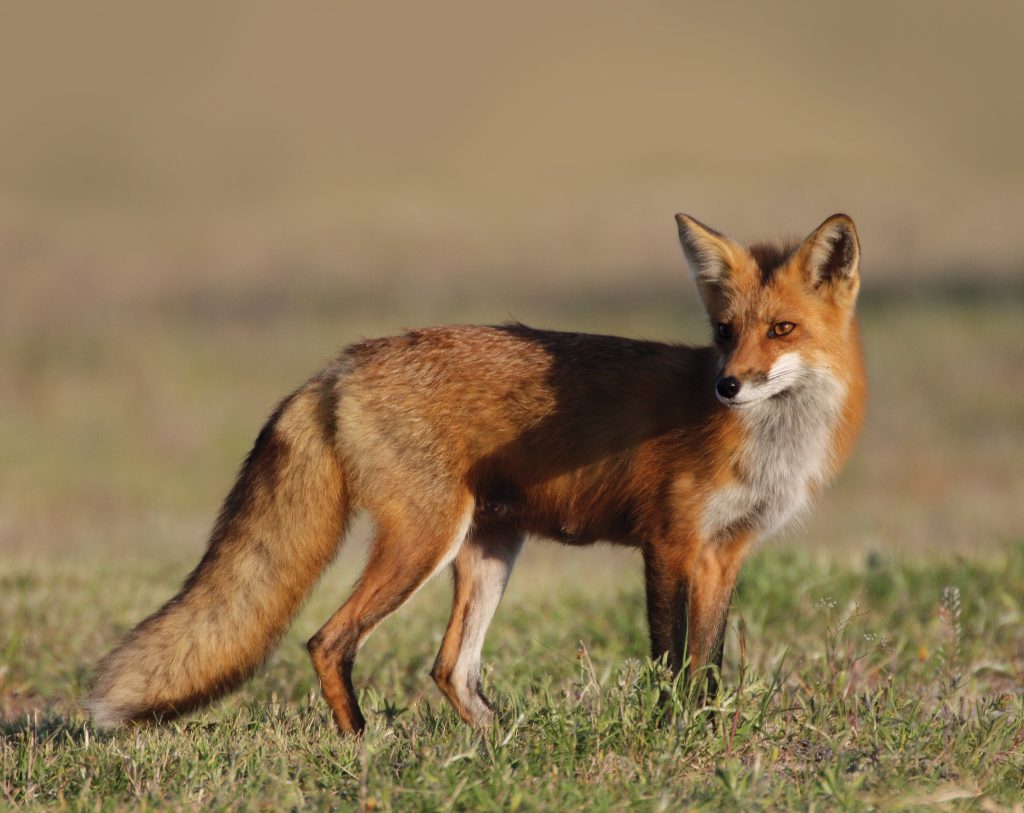
But it was a video from the night of Oct. 18 that really caught my attention. I paused and stared at the computer screen, not sure if my eyes were deceiving me. I replayed the video to be sure. Just before midnight, a lanky critter entered the camera’s field of view from the left, quickly walked through the frame, and exited stage right. It was only a few seconds of footage but long enough to make out the salient features — a pointed nose, triangular ears, white-tipped tail and four long legs that appeared to be wearing black socks. No doubt about it. It was a red fox, the first I have seen around Eagle Springs in many, many years.
Long believed to be introduced into the South by early European Colonists for sport, a 2012 genetic study revealed that red foxes are indeed native to the region. Turns out, the crafty canids naturally made their way from the boreal regions of North America and points farther west as the vast Eastern forests were cleared for agriculture purposes at the time of our nation’s founding.
When I was young, the red fox was the most ubiquitous of our native canids, and I observed them regularly around the Sandhills. North Carolina’s other native fox, the gray fox, was also around, but I rarely encountered it. With a fluffier tail, tipped in black instead of white, gray foxes are easy to distinguish from red foxes. About the only time I saw them in my youth was during their early winter breeding season, when the occasional individual could be seen skulking along the edge of our yard on moonlit nights.
By comparison, red foxes were seemingly everywhere. I vividly recall observing one dashing across a green of Seven Lakes Golf Club on a bright spring afternoon while teeing it up with my old man when I was around 12 years old. I regularly saw one along the entrance road to Pinecrest High School throughout my teenage years. Up until the turn of the new millennium, it was not uncommon to see the lifeless bodies of red foxes dotting highways throughout the Sandhills, all victims of hit and runs. Soon thereafter, for reasons unknown, I started seeing fewer and fewer red foxes in the region.
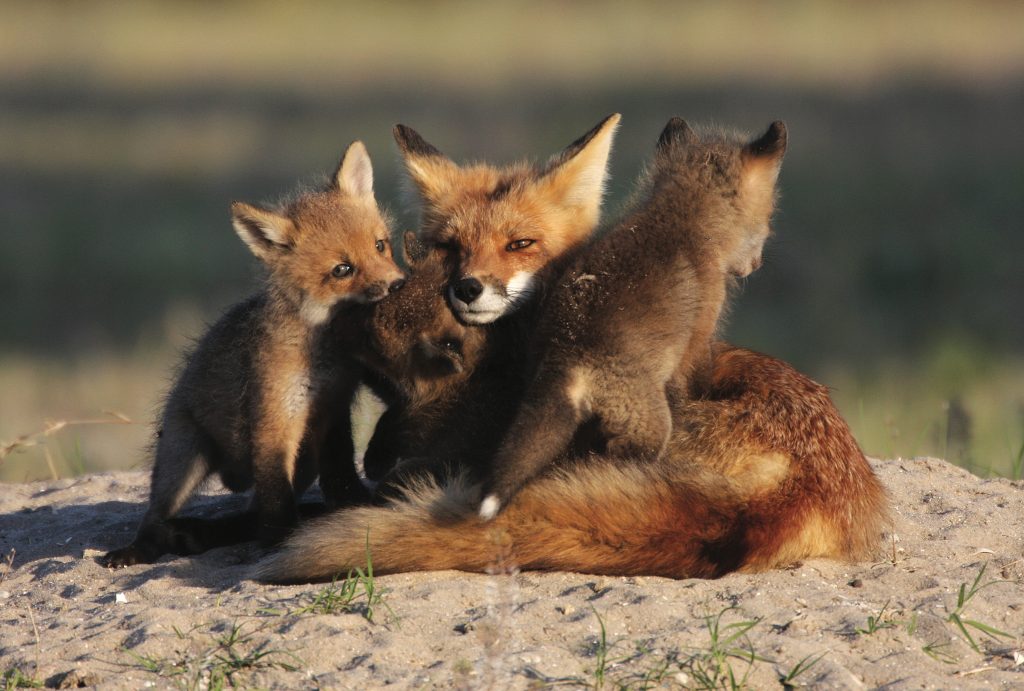
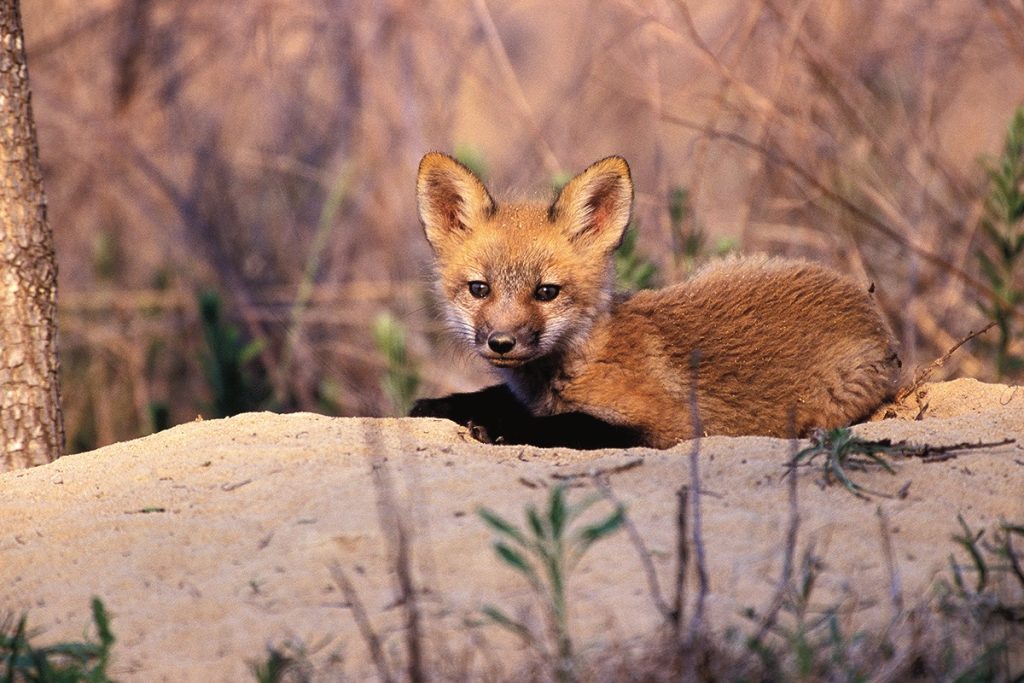
The last time I had an opportunity to photograph an Eagle Springs red fox was in the spring of 2003, when I found an active den near my parents’ house. Sitting in a blind nearby, I watched as the adorable pups roughhoused and played on a sand berm beneath a turkey oak while their parents were away foraging for food. Soon after that spring, sightings of the ginger dogs became more and more infrequent. My field notes from that time record no sightings of red foxes for years. It was as if the species had completely disappeared from the landscape. Did a disease, such as distemper or rabies, wipe out the local population?
A clue came the following year, when I saw my first coyote in Eagle Springs, a hefty adult walking across a plowed field on a moonlit night. Soon thereafter, I found a road-killed coyote a half mile from my parents’ house. Around the same time, local hunters began reporting more and more sightings of coyotes in Sandhills forests during deer season.
Like red foxes before them, coyotes arrived in North Carolina from points farther north and west, albeit much more recently. A 1982 study by the North Carolina Museum of Natural Sciences documented only three specimens of coyotes recorded from the entire state. By the early 2000s, it was becoming clear that coyotes were full-time residents in the Sandhills. Did these large, adaptable canids cause the decline of our local red foxes? Possibly. Studies in other areas have shown that the larger coyote will displace foxes from their territories in an effort to tamper down competition for food resources. It may not be a coincidence that red fox numbers plummeted around the same time that coyotes started to show up in decent numbers on the Eagle Springs landscape.
Reviewing iNaturalist (a popular citizen science app), I noted a dozen or so sightings of red foxes in the Sandhills over the past few years. Recent conversations with rangers at Weymouth Woods Nature Preserve and biologists working on the Sandhills Game Land have also revealed sightings. These anecdotes, along with my trail camera photo, offer a bit of excitement for those interested in our local wildlife.
Perhaps the ginger dogs of Eagle Springs are making a comeback.