
THE NATURALIST

Beautifully Common
Being exceptionally ordinary
Story and Photographs by Todd Pusser
When I was 11 years old, my parents gave me a book titled The World’s Whales. Published by the Smithsonian Institution, it was the first coffee table book to illustrate all the world’s cetaceans (whales, dolphins and porpoises) in a single volume. The spectacular photos and life-like paintings nestled within the high-gloss pages instantly captured my imagination. Throughout my high school and college years, I frequently thumbed through its pages, dreaming of one day becoming a marine biologist and making a list of all the whales and dolphins I most wanted to see in the wild.
Like many nature-obsessed kids who grew up reading about dinosaurs or watching Jacques Cousteau, I was fascinated by the strangest, most colorful, most dangerous, and the largest members of the animal kingdom. My list of whales and dolphins that I most wanted to see reflected those superlatives. The immense blue whale, the largest animal ever to inhabit Earth, was near the top of the list. The oddly shaped sperm whale, of Moby Dick fame, with its box-shaped head housing the largest brain in the animal kingdom, was on there, too. As was the aptly named hourglass dolphin of sub-Antarctic waters. The Southern right whale dolphin, a striking black and white animal that completely lacks a dorsal fin, so unlike any other oceanic dolphin, also caught my attention. But the absolute pinnacle of my list was the killer whale, a supremely intelligent apex predator that eats everything from seals to great white sharks.
Fast forward 40 years, and that book still occupies prime real estate in my library. Recently, I pulled it down and flipped through its pages, reflecting on nearly three decades of work on the ocean. In that time, I have been fortunate enough to check off each and every whale and dolphin from my list. It has been a remarkable run that has produced many amazing memories.
I found those blue whales off the coast of California, rolling on their sides and throwing open their cavernous mouths as they swallowed thousands of gallons of water and krill with a single gulp. Due south of Louisiana, in a deep-sea trench known as the Mississippi Canyon, I saw my first sperm whales. Off the rugged coast of Kaikoura, New Zealand, I observed a huge group of 500 Southern right whale dolphins, leaping from tall ocean swells within sight of snow-capped mountains. In Antarctica, I watched enthralled as hourglass dolphins played at the bow of our research vessel. And as for killer whales, I have seen them in oceans around the world, including spotting a small group off my home state of North Carolina in 2014.

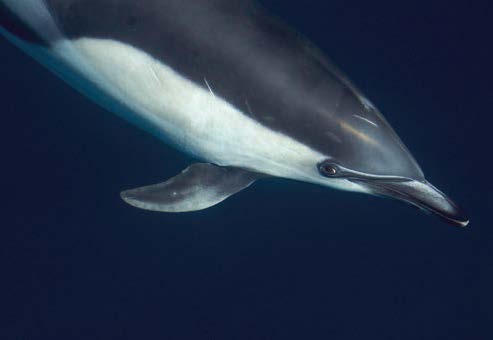
Looking back through the book, I paused at the account about common dolphins. For the life of me, I can’t understand why those dolphins failed to capture my childhood imagination. Common dolphins feature prominently in Greek and Roman societies, even appearing on their coins. Aristotle and Pliny the Elder were enthralled by common dolphins and wrote about them frequently in ancient texts. The common dolphin was, in fact, the first species of dolphin to be scientifically described. I think that my youthful lack of enthusiasm for the species stemmed from their name, common dolphin. It wasn’t superlative enough, not like the killer whale.

So many of us tend to ignore the common. It’s human nature to place value on the biggest, strongest, prettiest, weirdest, and especially, the rarest. As a budding naturalist, I ignored the animals and plants that I routinely saw day after day. But as is so often the case, time and experience have a way of changing one’s perspective. As I have aged, I have learned to appreciate the everyday nature that surrounds me, especially the common things, like the grey squirrel in the front yard or the bluebird perched on the powerline.
Common dolphins are aptly named. Scientists estimate their global population to be over 6 million, making them the most abundant dolphin swimming in the world’s oceans. Recently, off the coast of California, I encountered a group of common dolphins that stretched as far as the eye could see. The sea frothed white as thousands of dolphins leapt from the water all at once. It was a truly breathtaking experience. Marveling at the bright yellow hourglass-shaped patterns on their sides, I realized how wrong I was to overlook these animals in my youth. They are uncommonly beautiful.